
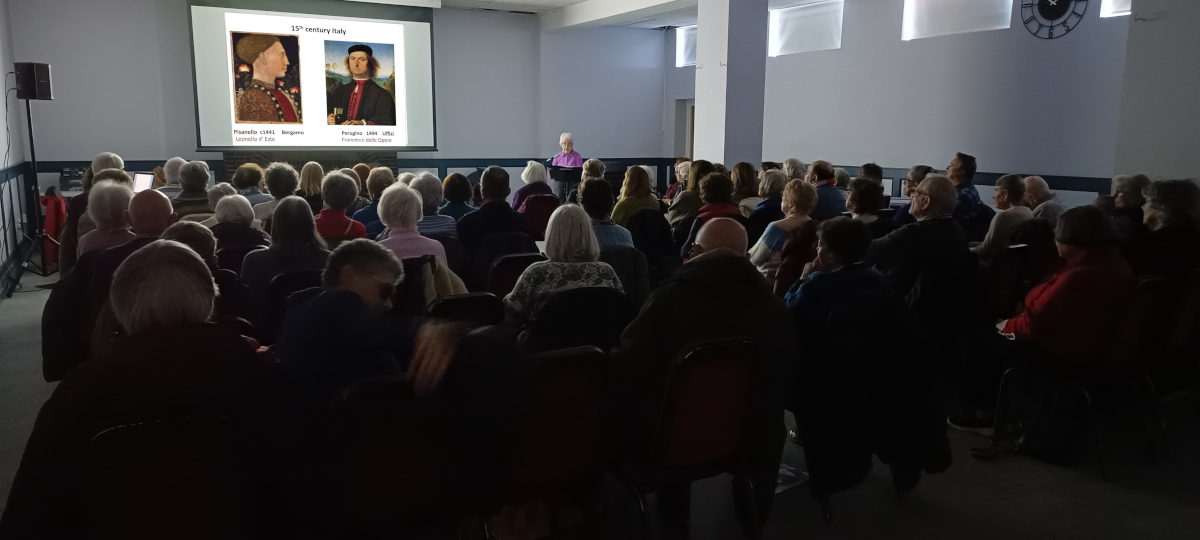
Our investigation into the styles of Portraiture from 1400-1550 continued with Jennifer on Friday 13 November 2026 without a hitch, unlike some of the other services on that day around the world!
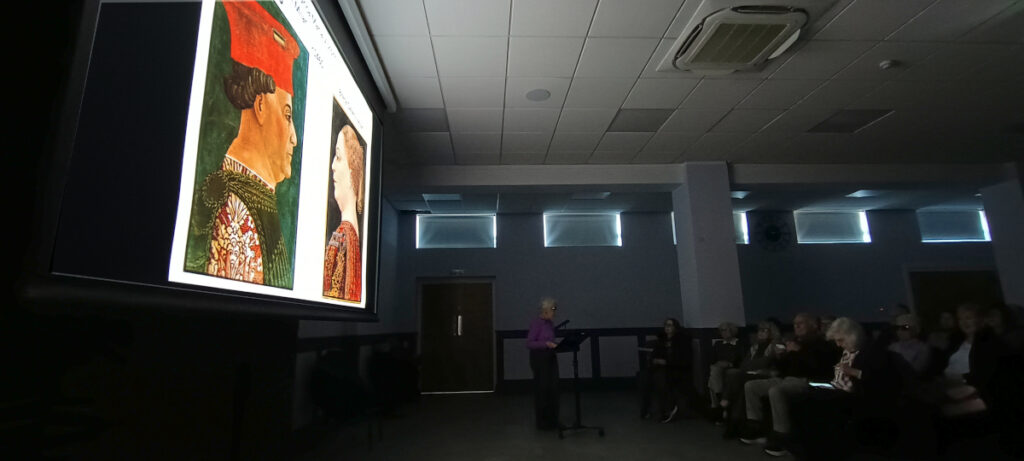
The popularity and style of portraits in Italy had concentrated on profile images. As the nobility, bankers, clerics and traders had moved from Italy to Flanders, they had taken that style with them. Many portraits resembled the profiles found on coins. In Flanders however, the style developed. Profile was upgraded into a three-quarters view with true perspective. Also, the backgrounds of the portraits changed from a plain wall to a view of the countryside familiar to the sitter.
The Italians liked to send their portraits in the new style back to Italy, and Italian painters were keen to demonstrate that they could also reproduce the style. One of the leading Flemish portrait painters was Hans Memling, and we saw many examples of his work.
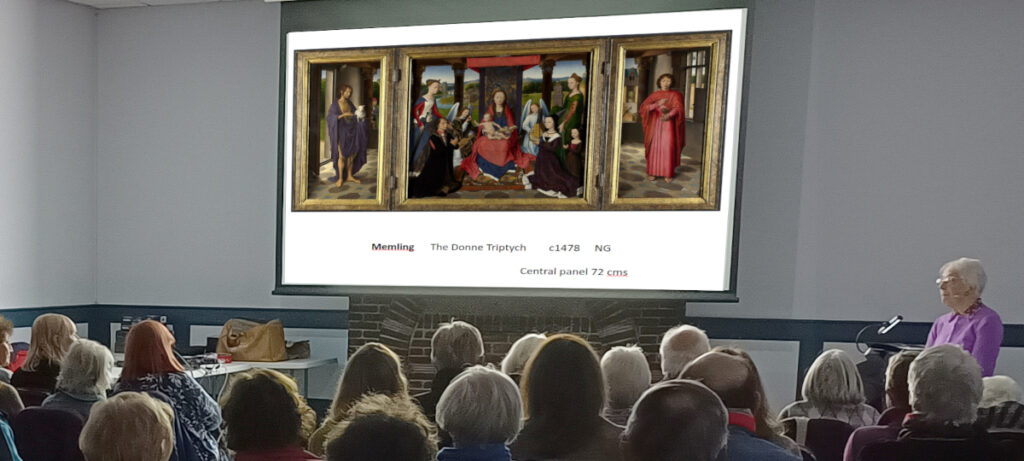
Memling had done many altar pieces, often as triptych or as diptychs. One feature of his work was the inclusion of the donor/sponsor in the work. In the past, the sponsors would have been on the outside edges of the work, but Memling placed them on the central panel, as shown above in black clothes.
After a short break for tea and coffee, Jennifer resumed her presentation on portraits in the National Gallery. She had been much taken by the portrait of Seamus Heaney who had won the Nobel Prize for Literature in 1995. The artist was Tai-Shan Schierenberg. This had led her to find more of his works – mostly his portraits and self-portraits.
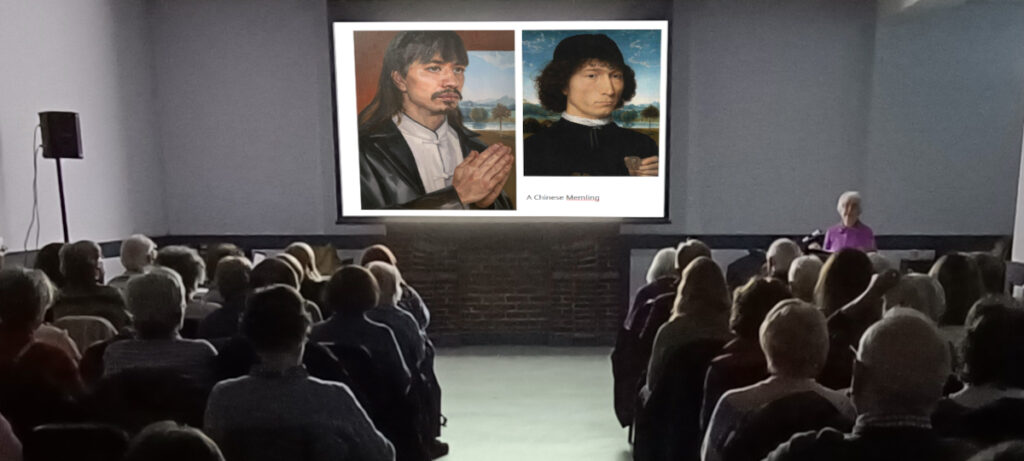
Her search was particularly fruitful, and we were able to finish with his painting of The Chinese Memling which Jennifer has set alongside the original Memling portrait of a man with a Roman coin, from c1480.
Our Art History Course continues on 27 November 2026 at 10:00 am.